
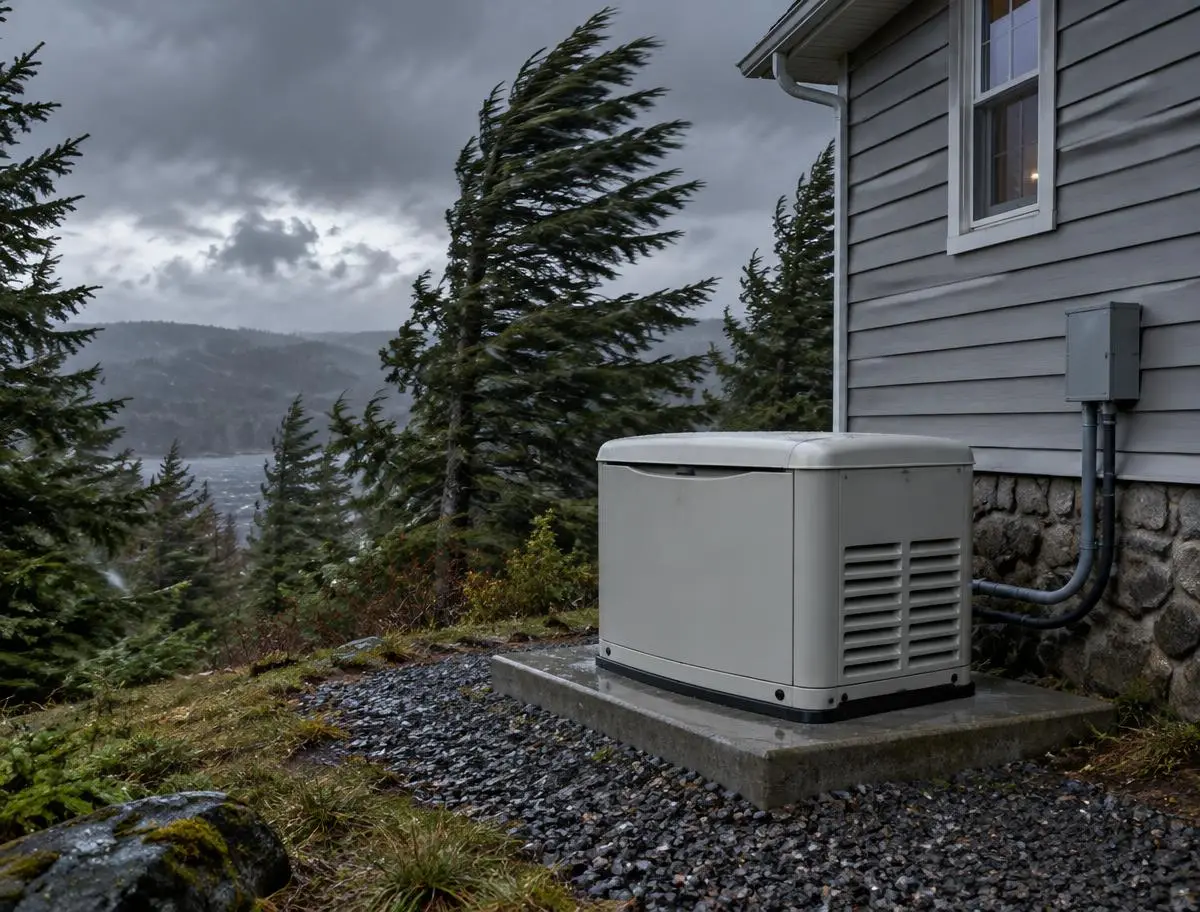
If you've lived in Jefferson County for even one winter, you know the pattern. The wind picks up in the afternoon, the tall firs start swaying, and by evening the lights flicker and go out. Sometimes power is back in an hour. Sometimes it takes days, especially out on Marrowstone Island, down US-101 toward Quilcene and Brinnon, or at the end of a long rural road off Center Road.
Who benefits most from a generator?
Not every home needs one, but a generator is worth serious consideration if any of these apply:
- Your home is on a well — no power means no water
- You heat with a heat pump or electric heat
- Someone in your household relies on medical equipment
- You work from home
- You've lost a freezer full of food to an outage before
- Your road is usually among the last restored
Standby vs. portable
Standby generators are permanently installed, run on propane or natural gas, and start automatically when the power drops. They're the most convenient option and can power much or all of a home. Portable generators cost less up front and can be very effective when connected through a proper inlet and interlock or transfer switch. You'll need to start it, connect it, and manage fuel during an outage.
What should stay on?
Most homeowners prioritize the well pump, refrigerator and freezer, some lights, the furnace or heat pump blower, internet and a few outlets. Listing those essentials is the first step in sizing a generator. We'll help with a load evaluation so you're not paying for more generator than you need — or ending up with too little.
Never backfeed through an outlet
Plugging a generator into a dryer outlet or wall receptacle with a 'suicide cord' is extremely dangerous. It can energize utility lines and injure the crews working to restore power, and it can damage your home's wiring. The only safe way to connect a generator to your home is through a transfer switch or code-approved interlock.
Plan before the storm
Fall is the best time to install or check a generator setup. Once a big storm hits, everyone calls at once. If you're thinking about backup power, call Reed Electrical at (360) 301-0333 Monday–Friday, 8 AM–5 PM, and we'll talk through your options.
